
JavaScript tooling is changing faster than ever.
For years, webpack dominated the frontend ecosystem almost by default. But modern applications have become significantly larger, development environments have become more complex, and developers now expect much faster feedback loops during local development.
As a result, a new generation of build tools is quickly replacing older workflows.
Many of these newer tools focus on native performance, faster startup times, incremental compilation, and better developer experience. Rust-based tooling in particular has become one of the biggest trends in the modern JavaScript ecosystem.
Today, developers are no longer choosing tooling based only on popularity. Speed, simplicity, and workflow efficiency are becoming just as important.
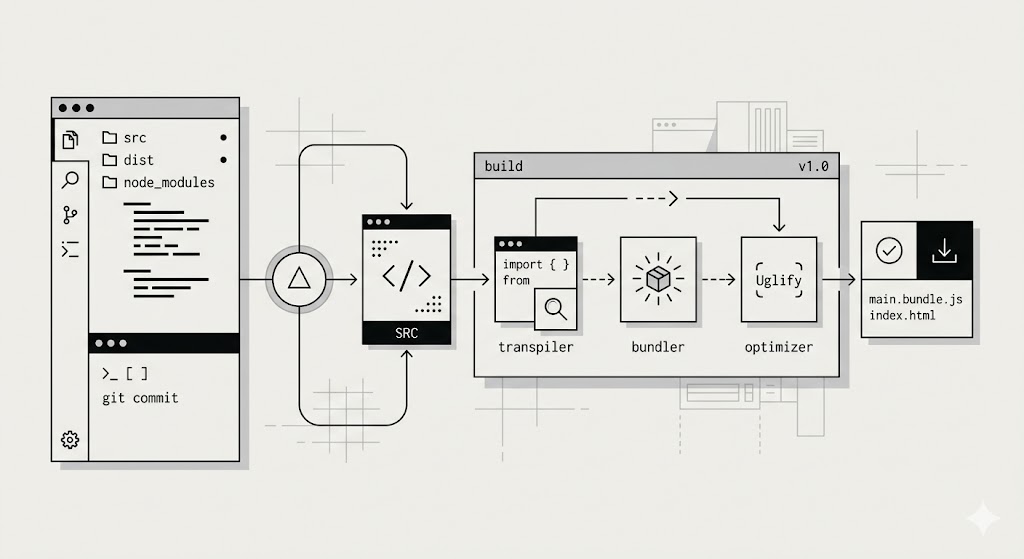
Why JavaScript Tooling Is Changing
Traditional JavaScript build systems were designed for a very different era of web development.
Modern frontend applications now include massive dependency graphs, real-time development servers, TypeScript support, server-side rendering, edge runtimes, and increasingly complex build pipelines.
At the same time, AI-assisted development is accelerating iteration speed. Developers are generating more code, experimenting more frequently, and rebuilding projects more often than before.
Slow tooling has become a real bottleneck.
This shift has created strong demand for tools that feel lighter, faster, and more responsive during everyday development.
Instead of waiting several seconds for rebuilds or large production bundles, developers now expect near-instant startup times and significantly faster hot reload performance.
That expectation is reshaping the entire JavaScript tooling ecosystem.
The Shift Toward Faster Toolchains
One of the biggest changes in recent years is the growing adoption of Rust-based infrastructure.
Rust offers significantly better performance characteristics than traditional JavaScript-based tooling, especially for parsing, bundling, linting, and compilation workloads.
As a result, many modern tools are now being partially or fully rewritten in Rust.
This trend can already be seen across the ecosystem:
- Rspack positions itself as a faster webpack-compatible bundler
- Rolldown is becoming part of the future Vite ecosystem
- Oxc aims to replace parts of the existing JavaScript tooling stack
- Turbopack focuses heavily on incremental performance
- Bun combines runtime, package management, and bundling into a single high-performance toolchain
Developers are also becoming more willing to replace older infrastructure if the workflow improvements are large enough.
Tooling is no longer viewed as invisible infrastructure hidden behind the framework. It has become part of the overall developer experience.
Vite
Vite has become one of the most influential frontend tools in the modern JavaScript ecosystem.
Originally created by Evan You, Vite introduced a dramatically faster development experience compared to traditional webpack setups. Instead of bundling the entire application during startup, Vite relies heavily on native ES modules during development, allowing projects to start almost instantly.
This change made frontend development feel significantly lighter.
For many developers, Vite was the first tool that made large frontend projects feel fast again.
Its plugin ecosystem has also grown rapidly, making it compatible with React, Vue, Svelte, Solid, and many other frameworks. Because of this flexibility, Vite is increasingly becoming the default starting point for modern frontend projects.
The ecosystem around Vite is also evolving quickly. Tools like Rolldown are expected to further improve performance while preserving the developer experience that made Vite popular in the first place.
Website: https://vitejs.dev
Bun
Bun is one of the most ambitious projects in the modern JavaScript ecosystem.
Instead of focusing only on bundling or package management, Bun attempts to replace multiple parts of the traditional Node.js development stack at once.
It includes:
- a JavaScript runtime
- a package manager
- a test runner
- a bundler
all inside a single toolchain.
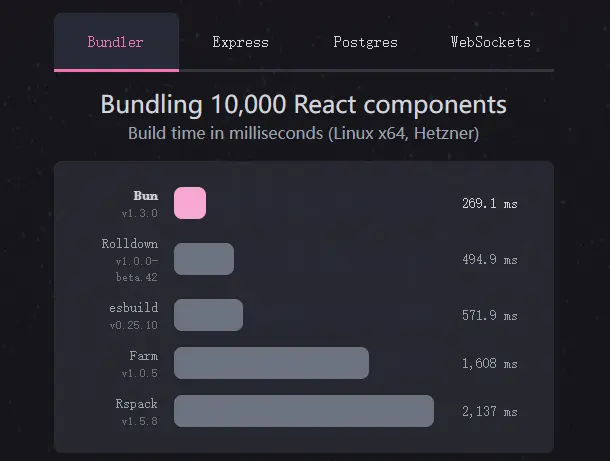
The biggest reason developers are experimenting with Bun is speed.
Startup times, dependency installation, and script execution are often noticeably faster compared to older workflows. For indie developers and startups, this can make everyday development feel much smoother.
Bun is also improving compatibility with the broader Node.js ecosystem at a rapid pace, which has made adoption easier than many developers initially expected.
While it may not fully replace Node.js for every production environment yet, Bun has already become one of the most closely watched developer tools in recent years.
Website: https://bun.sh
Rspack
Rspack is a Rust-based bundler designed as a faster alternative to webpack.
Unlike many newer tools that require completely different architectures, Rspack focuses heavily on compatibility with existing webpack projects and configuration patterns.
This makes migration significantly easier for larger teams.
For many companies, rebuilding an entire frontend toolchain from scratch is unrealistic. Rspack solves this by improving performance while preserving much of the existing webpack ecosystem.
This compatibility-first approach has helped it gain attention quickly, especially among larger React and enterprise applications.
Build performance, incremental compilation, and reduced memory usage are all major reasons developers are exploring Rust-based bundlers like Rspack.
Website: https://www.rspack.dev
Rolldown
Rolldown is one of the newer projects attracting attention in the JavaScript tooling ecosystem.
It is designed as a high-performance Rust-based bundler intended to become part of the future Vite infrastructure.
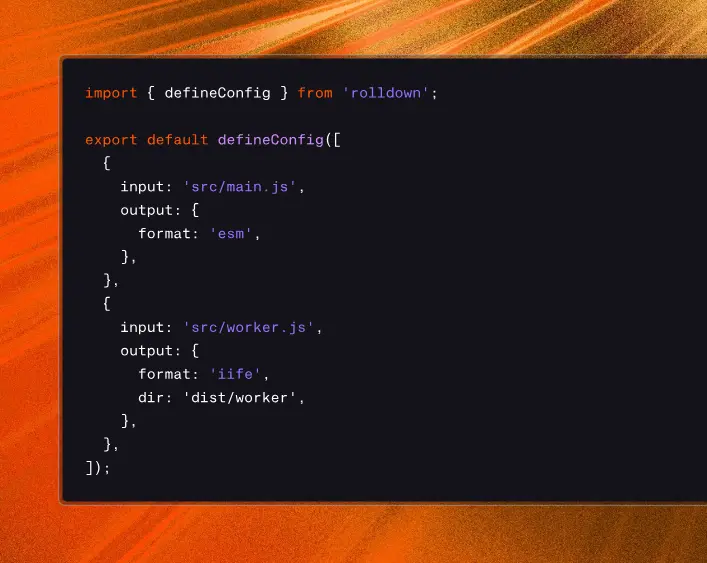
Although still evolving, Rolldown represents a broader trend happening across frontend tooling: core infrastructure is increasingly moving away from JavaScript implementations toward native systems programming languages.
Developers are watching Rolldown closely because Vite already powers a huge portion of the modern frontend ecosystem. If Rolldown succeeds, it could significantly improve build performance for many existing projects without requiring major workflow changes.
For developers already invested in Vite, Rolldown feels less like a completely new tool and more like the next stage of frontend infrastructure evolution.
Website: https://rolldown.rs
Turbopack
Turbopack is Vercel’s next-generation bundler built for large-scale React and Next.js applications.
Its main focus is incremental performance.
Instead of rebuilding entire applications repeatedly, Turbopack attempts to update only the parts of the project that actually changed, dramatically reducing rebuild times during development.

This becomes increasingly important as frontend applications continue growing in size and complexity.
Turbopack is also deeply connected to the future direction of the Next.js ecosystem, especially as React server components, streaming architectures, and hybrid rendering workflows become more common.
Although the tooling ecosystem is still evolving, Turbopack represents a larger shift happening across modern development infrastructure:
developers increasingly expect tooling to scale efficiently alongside the size of their applications.
Website: https://turbo.build/pack
How Developers Are Choosing Build Tools
Different projects now prioritize different tooling strategies.
For lightweight frontend projects and startup products, Vite often provides the simplest and fastest development experience.
Teams already heavily invested in webpack may prefer Rspack because migration is easier and compatibility remains high.
Developers building large React applications inside the Vercel ecosystem are increasingly experimenting with Turbopack and newer server-first architectures.
Meanwhile, Bun is attracting developers who want a more integrated and streamlined JavaScript workflow instead of maintaining multiple separate tools.
The ecosystem is becoming more fragmented, but also more specialized.
Instead of one dominant solution for every use case, developers are increasingly selecting tooling based on workflow preferences, application size, infrastructure requirements, and team experience.
The Future of JavaScript Tooling
Modern JavaScript tooling is increasingly moving toward native performance, incremental compilation, and tightly integrated developer workflows.
For years, webpack dominated frontend infrastructure almost by default. Today, the ecosystem looks far more diverse — but also far more innovative.
Rust-based tooling is becoming increasingly common. Build systems are becoming faster, smaller, and more specialized. And developers are starting to care less about “which framework is most popular” and more about overall development speed and iteration experience.
For startups and indie developers, this shift matters.
Faster tooling reduces feedback loops, improves local development, and makes modern stacks feel significantly lighter than they did only a few years ago.
The JavaScript ecosystem is unlikely to slow down anytime soon. But one thing is already clear:
build tooling is no longer just invisible infrastructure behind the scenes.
It has become part of the product development experience itself.