
Modern software teams are automating more workflows than ever before.
What used to be simple task automation has gradually evolved into something much bigger. Startups now rely on automated systems for everything from API orchestration and background jobs to AI agents, internal operations, customer workflows, and content pipelines.
At the same time, many developers are becoming less interested in closed automation platforms with expensive pricing and limited flexibility. Open-source alternatives are gaining traction because they offer more control, better customization, and the ability to self-host critical workflows when needed.
This article explores some of the most interesting open-source workflow automation tools available today.
Why Open-source Automation Tools Are Growing
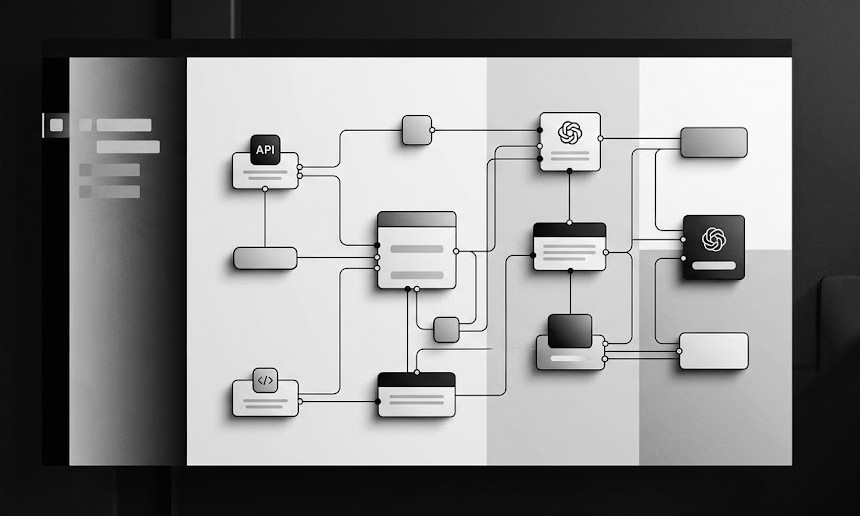
Automation platforms are no longer just “if this then that” tools.
Modern systems can connect APIs, coordinate services, trigger multi-step workflows, process events in real time, and even orchestrate AI agents across different platforms. For many startups and developer teams, automation is starting to feel less like a productivity add-on and more like part of the infrastructure itself.
This shift is also changing what developers expect from automation software.
Instead of relying entirely on closed SaaS platforms, more teams are looking for tools they can customize, extend, and self-host. Open-source automation platforms are especially attractive because they reduce vendor lock-in and give developers much more flexibility over how workflows are built and deployed.
The rise of AI workflows has accelerated this trend even further. As LLMs, agents, browser automation, and backend orchestration become more common, developers increasingly need systems that can connect everything together without becoming overly complex.
Different Types of Automation Tools
Not all automation platforms are designed for the same kind of workflow.
Some focus on business integrations and operational automation, while others are built around AI pipelines, infrastructure orchestration, or event-driven systems. Understanding these differences makes it much easier to choose the right tool for a specific workflow.
General Workflow Automation
These platforms focus on connecting services, APIs, databases, and internal operations through visual workflows.
Tools like n8n and Activepieces fall into this category. They are often used for automating startup operations, syncing data between services, or replacing repetitive backend tasks.
AI Workflow Systems
AI-focused automation tools are designed for LLM pipelines, memory systems, agents, and orchestration.
Platforms like Flowise and Mastra make it easier to build AI workflows visually without wiring every component manually.
Developer Automation Platforms
Some automation systems are built specifically for engineering teams.
Instead of focusing purely on drag-and-drop workflows, tools like Windmill emphasize scripting, scheduling, infrastructure tasks, and internal developer operations.
Event-driven Automation
Platforms like Node-RED are optimized for event-based systems and real-time processing.
They are commonly used for IoT workflows, hardware integrations, and environments where different services need to react to live events continuously.
n8n
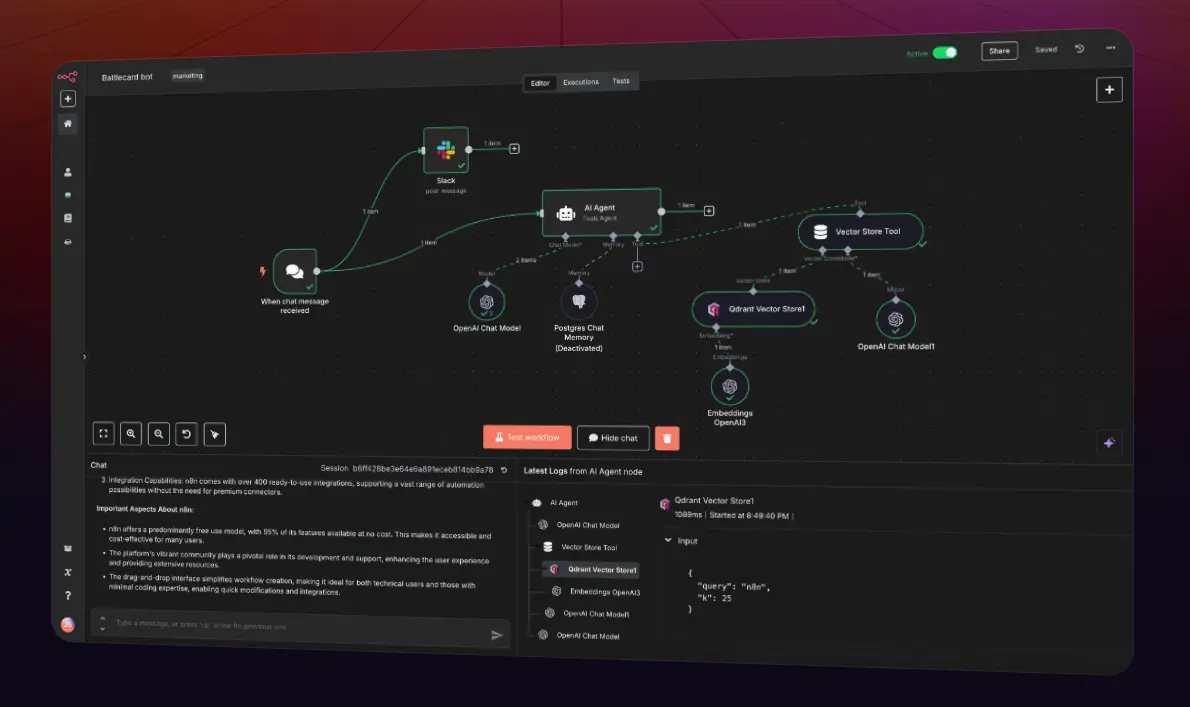
n8n has quickly become one of the most popular open-source automation platforms in the developer ecosystem.
It combines visual workflow building with the flexibility developers usually expect from backend tooling, making it a strong alternative to more restrictive no-code platforms.
Why Developers Like It
One of the biggest reasons behind n8n’s growth is its balance between simplicity and flexibility.
The visual editor is approachable enough for non-technical workflows, but developers can still inject custom JavaScript logic, work directly with APIs, handle webhooks, connect databases, and build fairly complex backend automations without much friction.
Compared to traditional automation tools, n8n feels much more extensible and developer-oriented. Its self-hosting support and rapidly growing integration ecosystem have also made it especially popular among startups and indie hackers.
Best For
- startup automation
- backend workflows
- AI orchestration
- self-hosted automation
- internal operations
Website: https://n8n.io/
Flowise
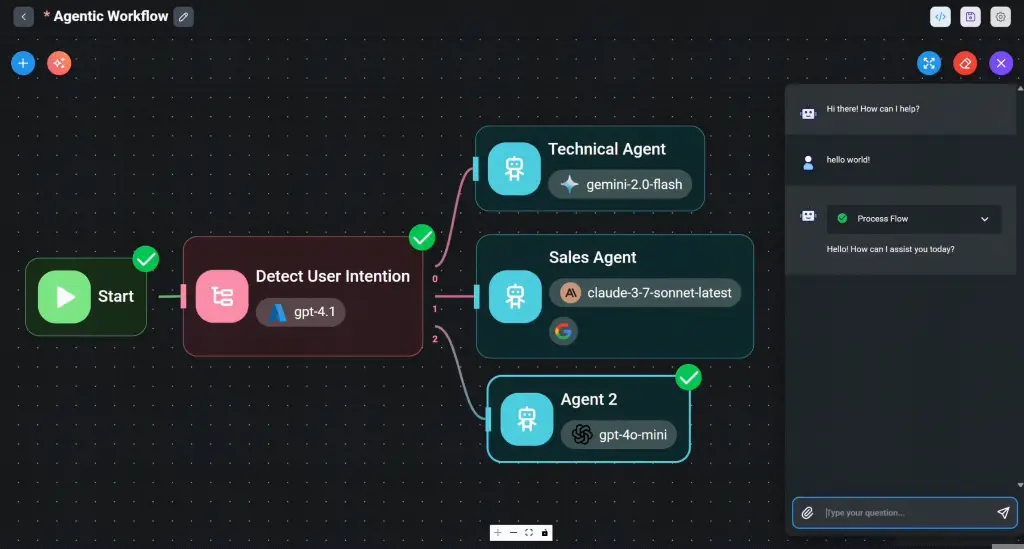
Flowise is an open-source visual platform designed for building LLM applications and AI workflows.
It allows developers to connect models, vector databases, memory systems, tools, and agents through a node-based interface.
Why Developers Like It
Building AI systems often involves connecting many moving parts together manually. Flowise simplifies this process significantly by turning complex AI pipelines into visual workflows.
This makes experimentation much faster, especially for developers working with RAG systems, local AI setups, or multi-agent workflows. Instead of writing orchestration logic from scratch, teams can visually prototype and iterate on AI systems much more efficiently.
As AI workflows continue to evolve, Flowise has become one of the most widely discussed open-source tools in this space.
Best For
- AI workflows
- RAG systems
- agent orchestration
- AI prototyping
- local AI stacks
Website: https://flowiseai.com/
Activepieces
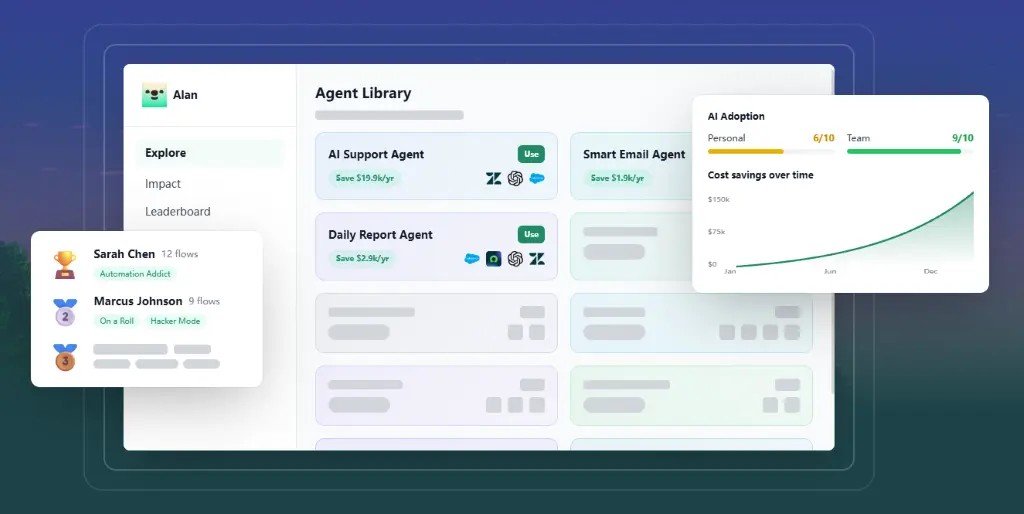
Activepieces is a lightweight open-source automation platform often positioned as an alternative to Zapier.
Its main focus is simplicity, fast deployment, and practical workflow automation for smaller teams.
Why Developers Like It
Compared to many enterprise-oriented automation systems, Activepieces feels much more approachable.
The interface is clean, workflows are relatively easy to build, and the overall experience is lightweight without feeling overly simplified. For startups that want self-hosted automation without managing overly complex infrastructure, it offers a nice middle ground.
The project is also evolving quickly, with a growing number of integrations and active community development.
Best For
- startup workflows
- small teams
- internal automation
- lightweight business operations
Website: https://www.activepieces.com
Windmill
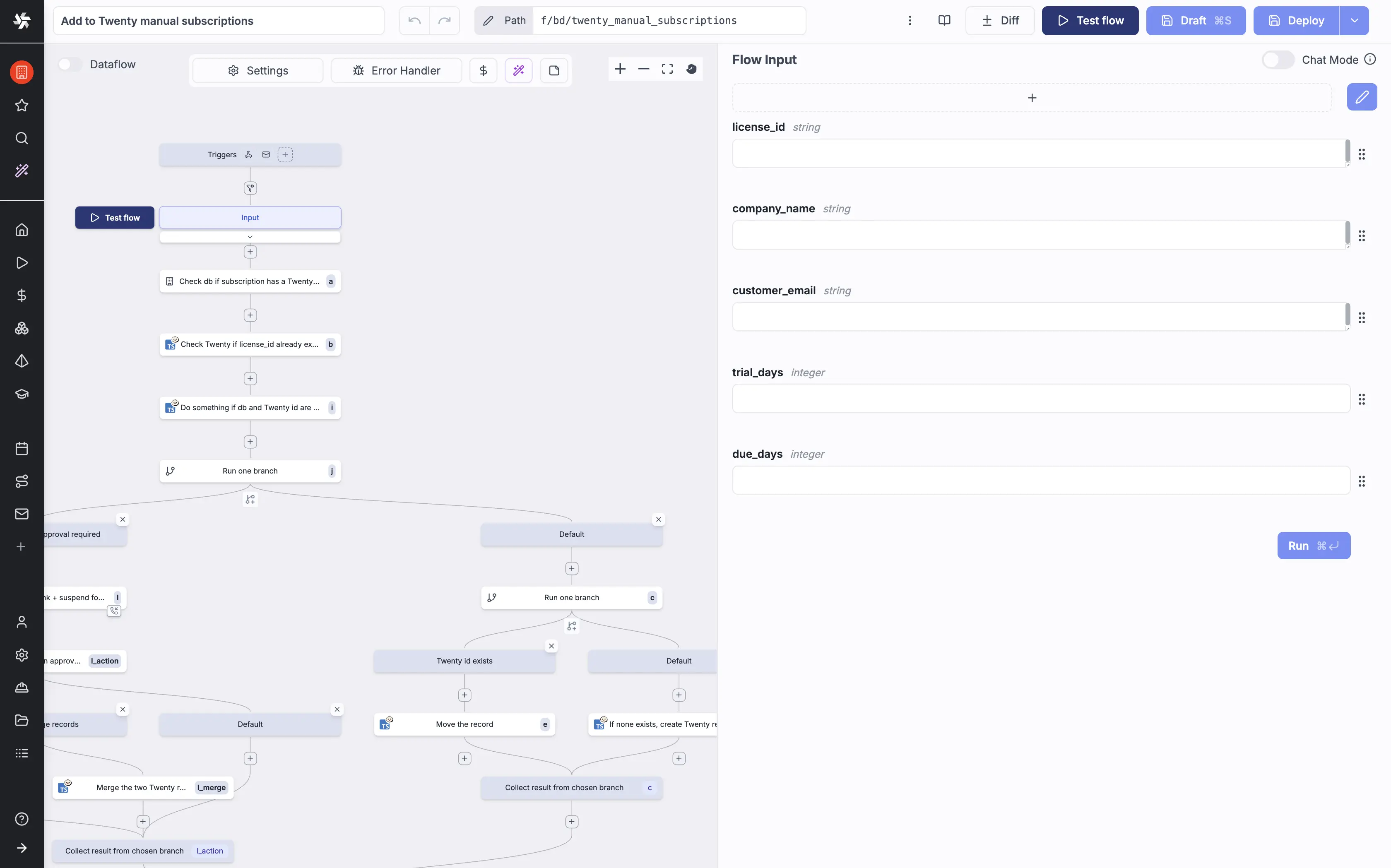
Windmill takes a more developer-first approach to automation.
Instead of relying entirely on visual builders, it focuses heavily on scripting, orchestration, scheduling, and internal tooling.
Why Developers Like It
Windmill is especially attractive for engineering teams that want automation systems built around real code rather than purely drag-and-drop logic.
Workflows can run scripts written in TypeScript, Python, Go, and Bash, making the platform much more flexible for backend operations and infrastructure-related tasks.
It also includes features like permissions, scheduling, workflow execution, and lightweight UI generation, allowing teams to build internal tools directly on top of their automation layer.
Best For
- engineering automation
- scheduled jobs
- internal developer tools
- infrastructure workflows
- backend operations
Website: https://www.windmill.dev
Node-RED
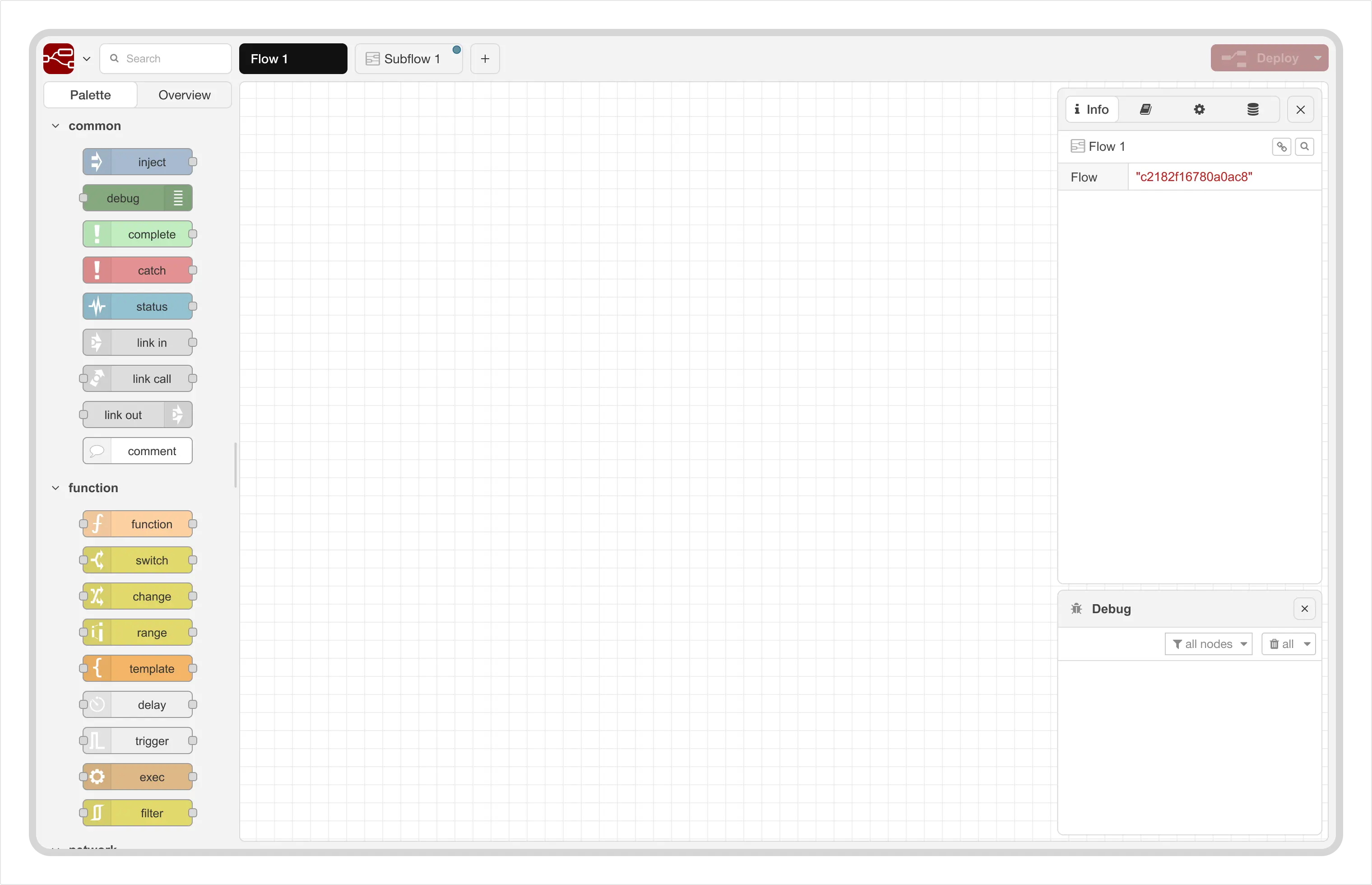
Node-RED is one of the oldest and most established open-source workflow automation platforms.
Originally created for IoT systems, it has gradually evolved into a flexible event-driven automation framework used across many different environments.
Why Developers Like It
Node-RED has remained popular for years largely because of its modular design and huge ecosystem of community-created nodes.
Its visual flow-based system makes it easy to connect services, APIs, hardware devices, and scripts together without building everything from scratch. While newer platforms have gained momentum recently, Node-RED still feels extremely reliable for event-driven systems and experimentation-heavy workflows.
Best For
- IoT automation
- event-driven systems
- hardware integrations
- API orchestration
- experimentation
Website: https://nodered.org
Which Tool Should You Choose?
The best automation platform depends heavily on the type of workflow you are building.
For AI agents, RAG pipelines, and LLM orchestration, Flowise is currently one of the strongest open-source options available. If you want a more general-purpose automation platform with strong self-hosting support, n8n is usually the safest starting point.
Activepieces works well for smaller teams that want lightweight business automation without too much complexity, while Windmill is often a better fit for engineering-heavy workflows built around scripting and infrastructure tasks.
Node-RED remains highly relevant for event-driven systems, IoT environments, and workflows that depend heavily on modular integrations.
Final Thoughts
Workflow automation is gradually becoming part of the modern software stack itself.
As APIs, AI agents, self-hosted infrastructure, and internal tooling continue to grow, automation platforms are evolving far beyond simple task automation.
The most interesting tools today are not just helping teams save time. They are becoming orchestration layers that connect entire systems together.