


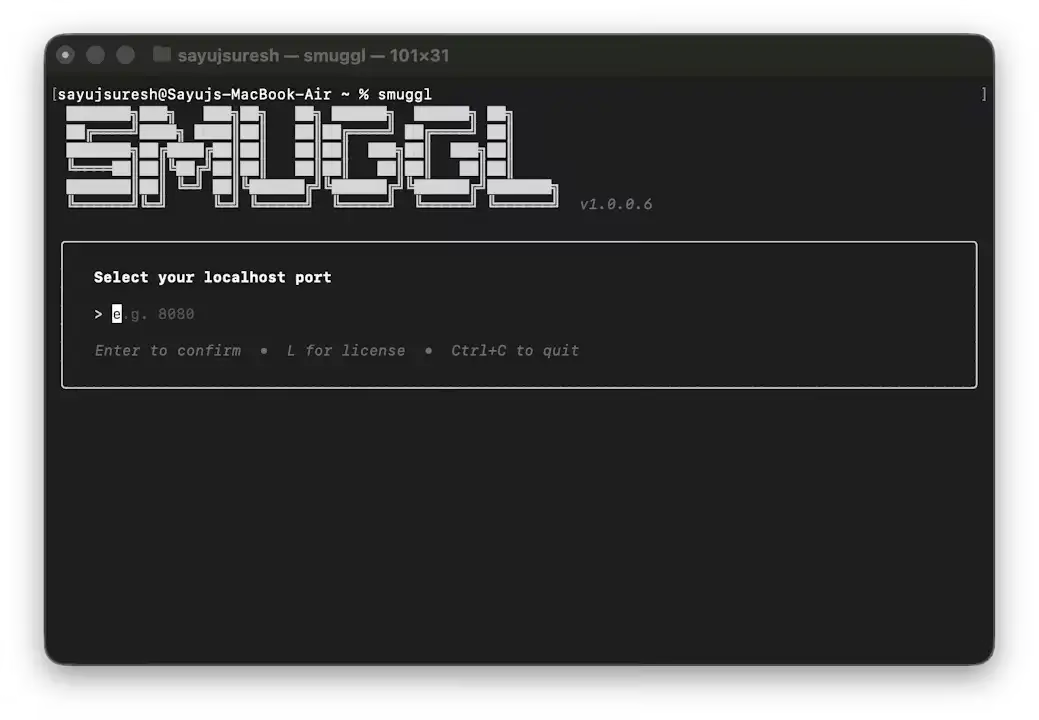
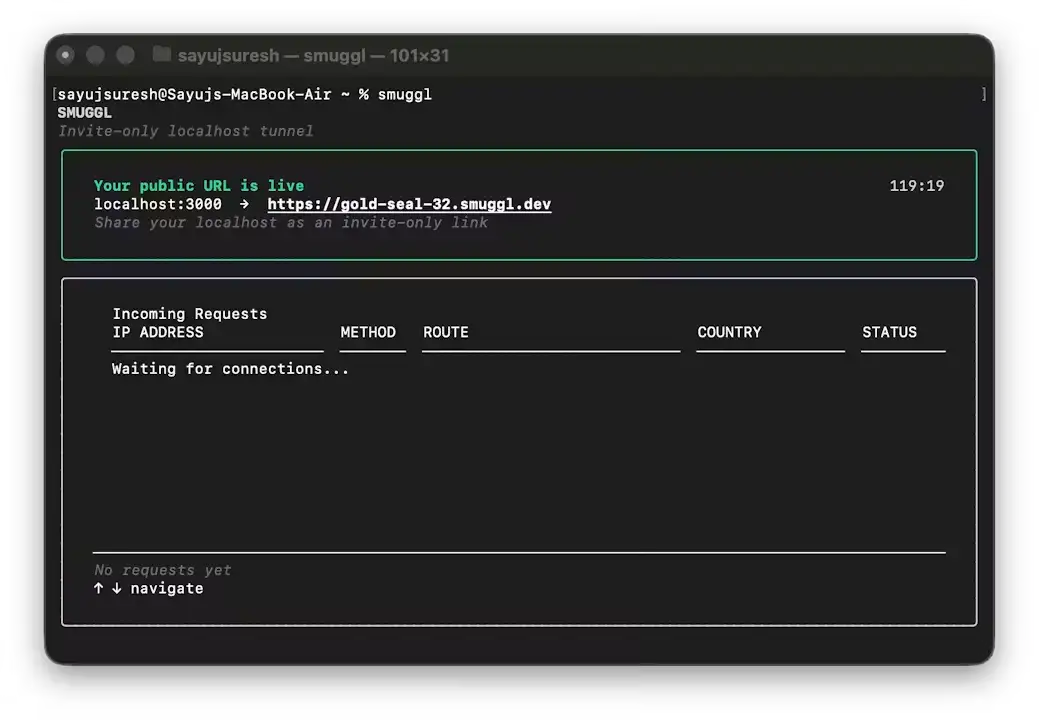
Developers often need to share local applications with teammates, clients, or testers before deployment. Traditional tunneling tools make this easy, but they frequently expose services through public URLs that anyone with the link can access. Smuggl is built around a different philosophy: sharing localhost should be simple, but it should also be secure by default.
Smuggl allows developers to expose local applications through invite-only links rather than publicly accessible endpoints. Instead of opening a service to the entire internet, access can be restricted to specific people, reducing the risk of unwanted visitors, accidental discovery, or unauthorized testing.
The product is particularly useful during development, client reviews, demos, QA testing, and internal collaboration. Teams can share work-in-progress applications without needing to deploy them to staging environments or configure complex infrastructure. The result is a faster feedback loop while maintaining greater control over who can access the application.
As a command-line tool, Smuggl fits naturally into existing developer workflows. It focuses on solving a specific problem without adding unnecessary complexity, making it easy to adopt whether you're working solo or as part of a larger engineering team.
At its core, Smuggl aims to modernize localhost sharing by treating privacy and access control as first-class features rather than optional add-ons. For developers who regularly expose local services for testing or collaboration, it offers a more controlled alternative to traditional public tunneling solutions.