


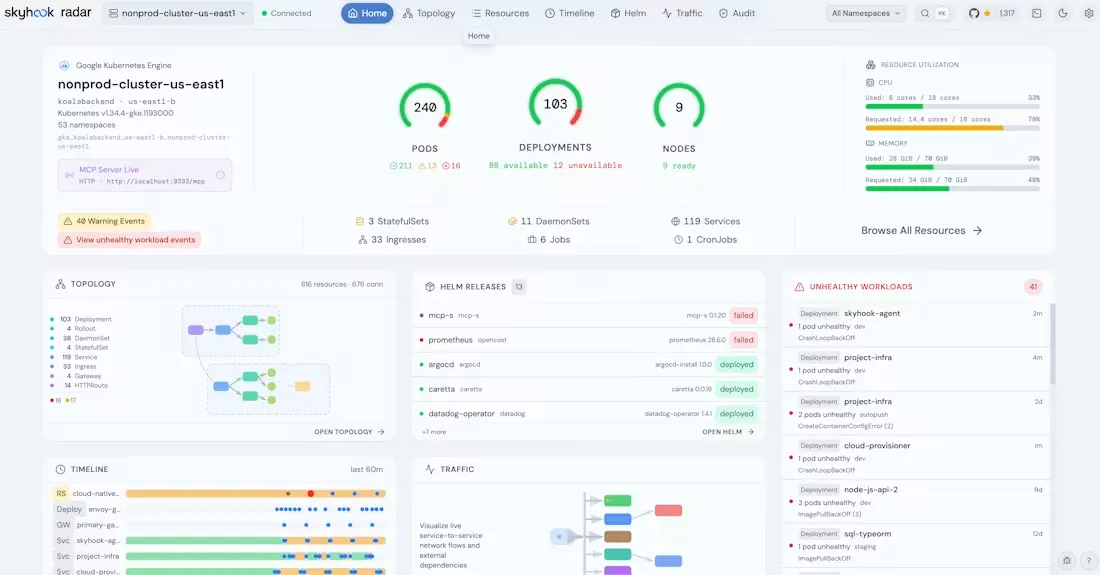
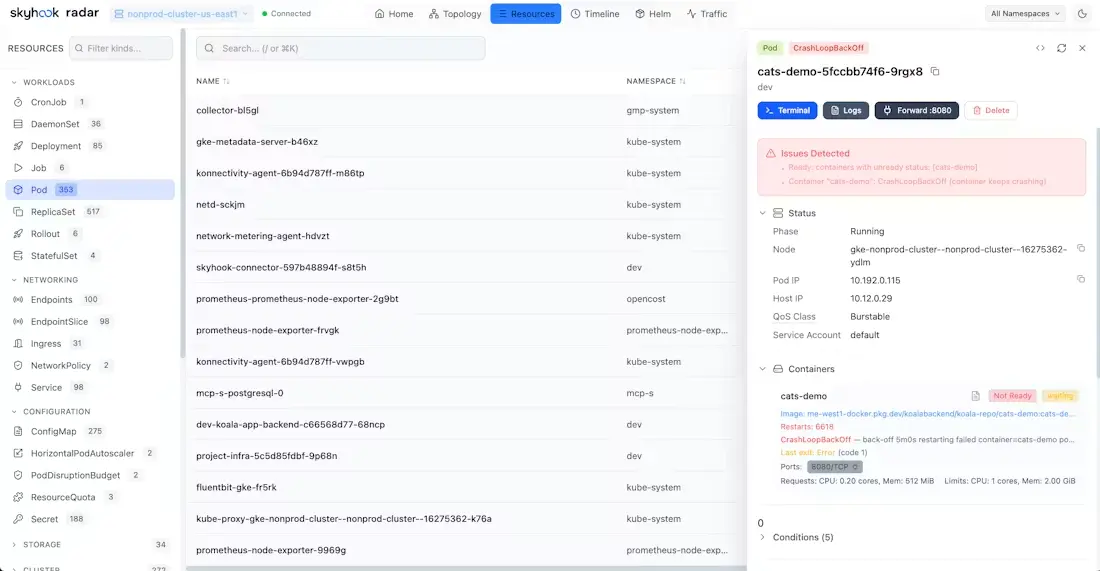
Radar is an open-source Kubernetes UI designed to give developers a faster, more unified way to understand and manage cluster state. Instead of jumping between multiple dashboards, CLIs, and observability tools, Radar brings core Kubernetes workflows into a single interface that is optimized for clarity and real-time insight.
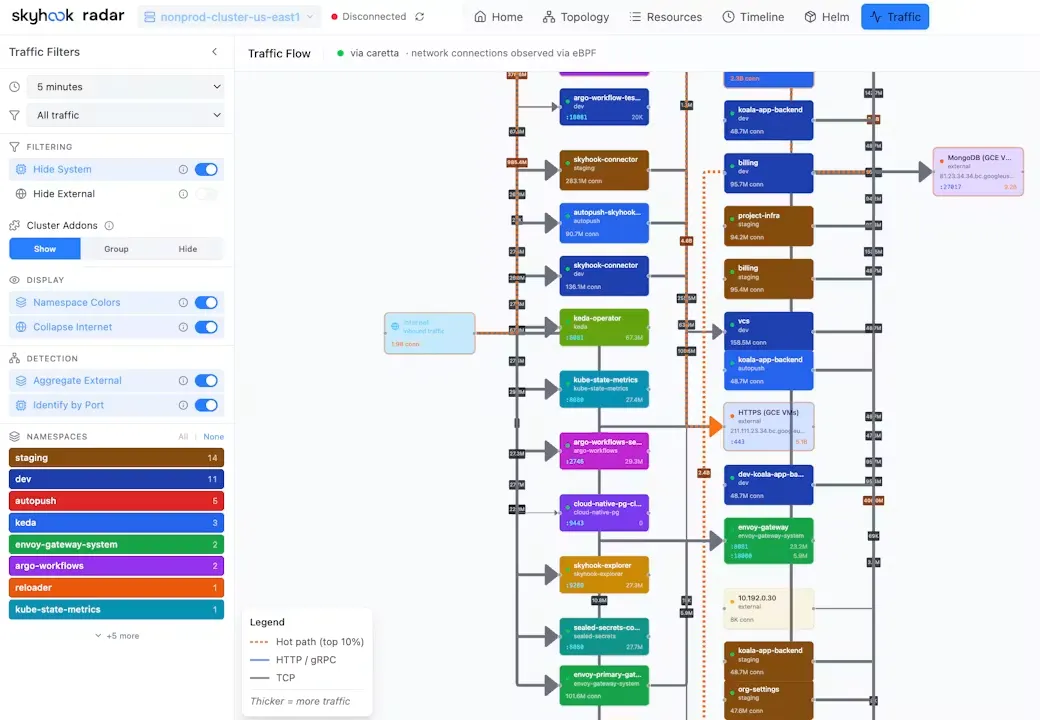
The platform provides a live view of cluster topology, resources, events, and traffic flows, making it easier to understand how services interact inside a running system. It also integrates Helm and GitOps workflows, allowing teams to see not only what is deployed but also how changes are being managed and applied over time.
Beyond standard cluster visualization, Radar includes deeper operational features such as security and best-practice checks, as well as image filesystem inspection. These capabilities help teams catch issues earlier and gain a more complete understanding of what is actually running in production.
A notable aspect of Radar is its flexibility in deployment. It can run locally as a single binary for quick inspection or be self-hosted inside a cluster with RBAC and OIDC support for more secure, team-based environments. There is no requirement for accounts or external cloud services, keeping everything under user control.
Radar also exposes MCP support for AI agents, enabling automated systems to query and interact with cluster state directly. This positions it not just as a visualization tool, but as an interface layer between Kubernetes and emerging AI-driven infrastructure workflows.
Overall, Radar aims to simplify Kubernetes operations by consolidating fragmented tooling into a single, fast, and open-source UI that works both for humans and AI systems.