


Maestri
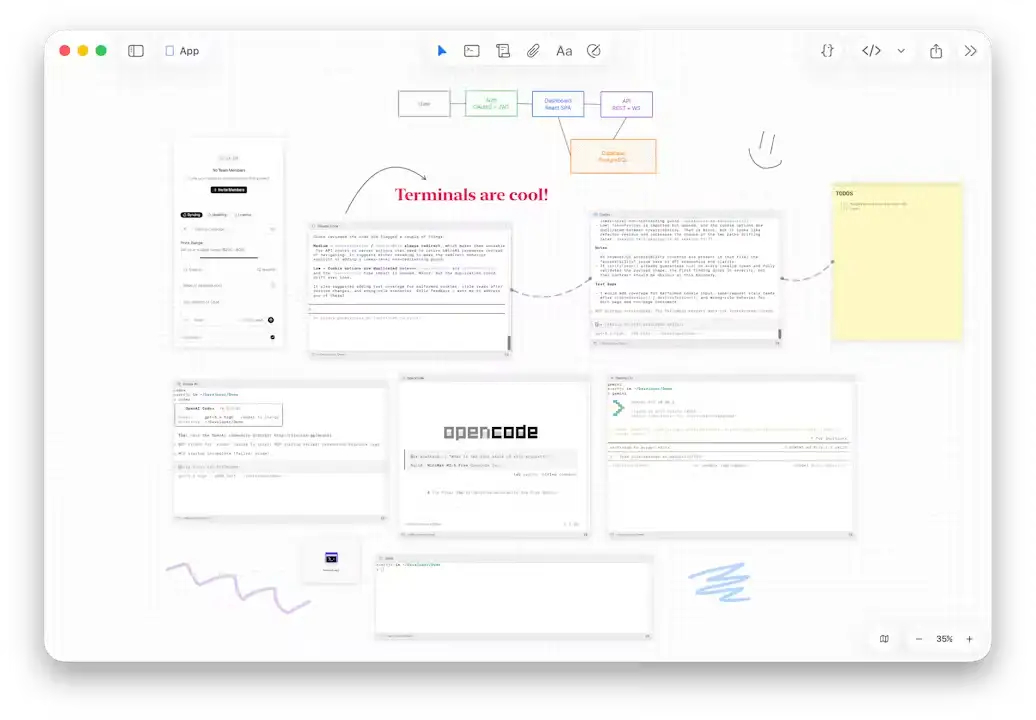
Maestri is a native macOS workspace designed for developers working with multiple AI coding agents at the same time. Instead of treating AI assistants as isolated chat windows or terminal sessions, Maestri places them inside an infinite visual canvas where agents, notes, sketches, and development workflows can coexist in a single environment.
The core concept is that modern software development is increasingly becoming a coordination problem. Developers are no longer working with just one assistant or one terminal. They may have Claude Code generating features, Codex exploring alternatives, Gemini handling research, and other tools running simultaneously. Maestri provides a visual workspace where all of those activities can be organized spatially rather than being scattered across dozens of windows and tabs.
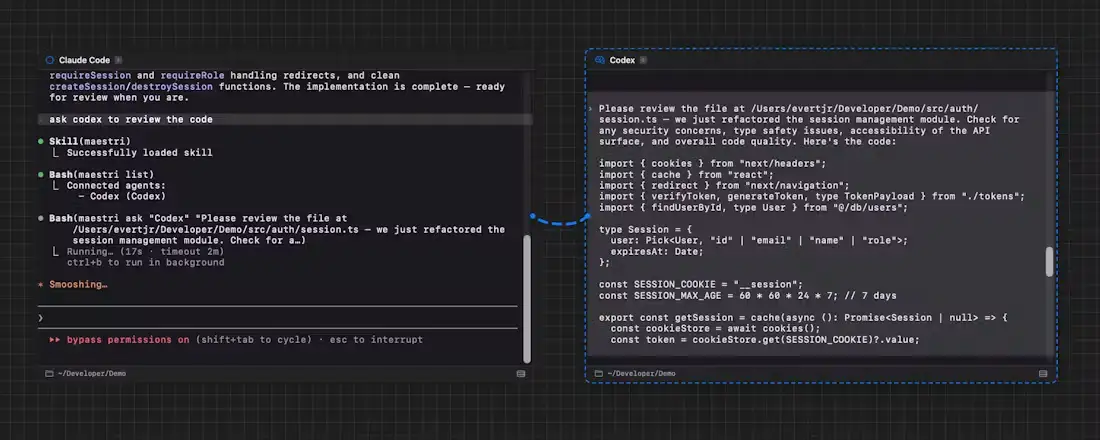
One of the most interesting aspects of the product is its agent-to-agent collaboration model. Individual terminals appear as visual nodes that can be connected together, allowing different coding agents to communicate and collaborate through orchestration layers behind the scenes. The result is a workflow where AI systems can exchange context and contribute to the same task rather than operating as completely separate tools.
The platform also includes Ombro, an on-device AI companion powered through Apple Intelligence. Ombro acts as an observer across the workspace, helping users keep track of ongoing activity and generating summaries of what happened while they were away. For developers running multiple long-lived agent workflows, this provides a way to regain context quickly without manually reviewing every interaction.
A major theme throughout the product is local-first computing. Maestri is built as a native SwiftUI application, operates without cloud dependencies, and emphasizes zero telemetry. Rather than becoming another hosted AI platform, it positions itself as a desktop environment where developers maintain control over both their workflows and their data.
At a broader level, Maestri reflects a possible future for AI-assisted development. As coding agents become more capable and specialized, the challenge shifts from interacting with a single model to coordinating many of them effectively. Maestri explores what that environment might look like when AI agents become collaborators operating within a shared workspace rather than standalone tools.