


InstantDB
InstantDB is an open-source backend platform designed to make full-stack application development dramatically simpler, especially in an era where more software is being created with the help of AI coding tools. Rather than forcing developers to assemble authentication, databases, permissions, file storage, and realtime infrastructure from multiple services, InstantDB packages these capabilities into a single platform that can be integrated from the start.
The project is built around a straightforward idea: modern AI coding assistants are increasingly capable of generating frontend and application logic, but backend setup often remains the bottleneck. Developers still need to configure databases, implement authentication systems, define permissions, manage storage, and connect everything together before an application is production-ready. InstantDB aims to remove much of that complexity.
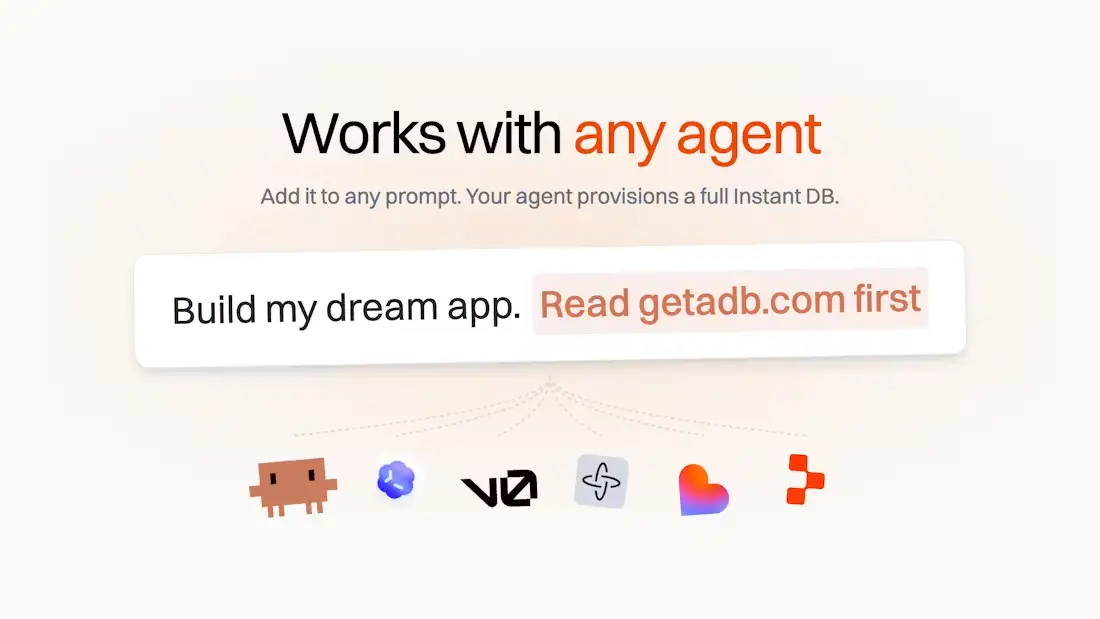
One of the product's most distinctive features is how it positions itself alongside AI-assisted development workflows. Developers can reference InstantDB directly in prompts or bootstrap projects with a simple command, allowing coding agents to generate applications that already understand the platform's architecture and capabilities. This makes it particularly appealing for rapid prototyping, indie projects, and the growing "vibe coding" ecosystem.
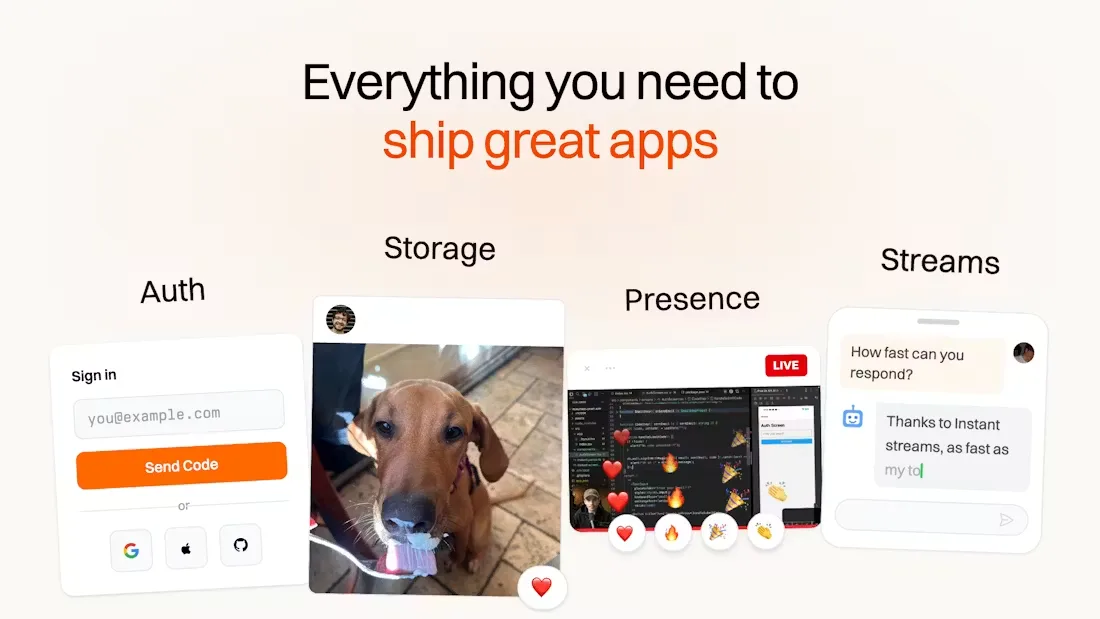
Despite its focus on speed, InstantDB is not positioned solely as a prototyping tool. The platform includes features such as authentication, access control, realtime synchronization, presence, storage, and streaming capabilities that are typically required by production applications. This allows projects to start quickly without immediately outgrowing the underlying infrastructure.
As AI-generated software becomes more common, tools like InstantDB are emerging as a new layer of developer infrastructure. Rather than replacing developers, they provide opinionated building blocks that help both humans and AI agents move from idea to working application much faster. The result is a platform that sits somewhere between a traditional backend service and an AI-native development framework.