


InfrOS
InfrOS is built for teams that design and run cloud systems and want fewer surprises after deployment. The core idea is to move architecture validation earlier in the lifecycle, so decisions about performance, cost, and reliability are made before infrastructure actually goes live, not after issues show up in production.
Most infrastructure work today still follows a familiar pattern. You design something, deploy it, watch it break in unexpected ways, and then spend time and money fixing what could have been avoided. InfrOS is built to change that loop by letting teams test assumptions about their architecture in advance, using modeled behavior instead of real-world incidents as the only feedback signal.
Designing systems with constraints in mind
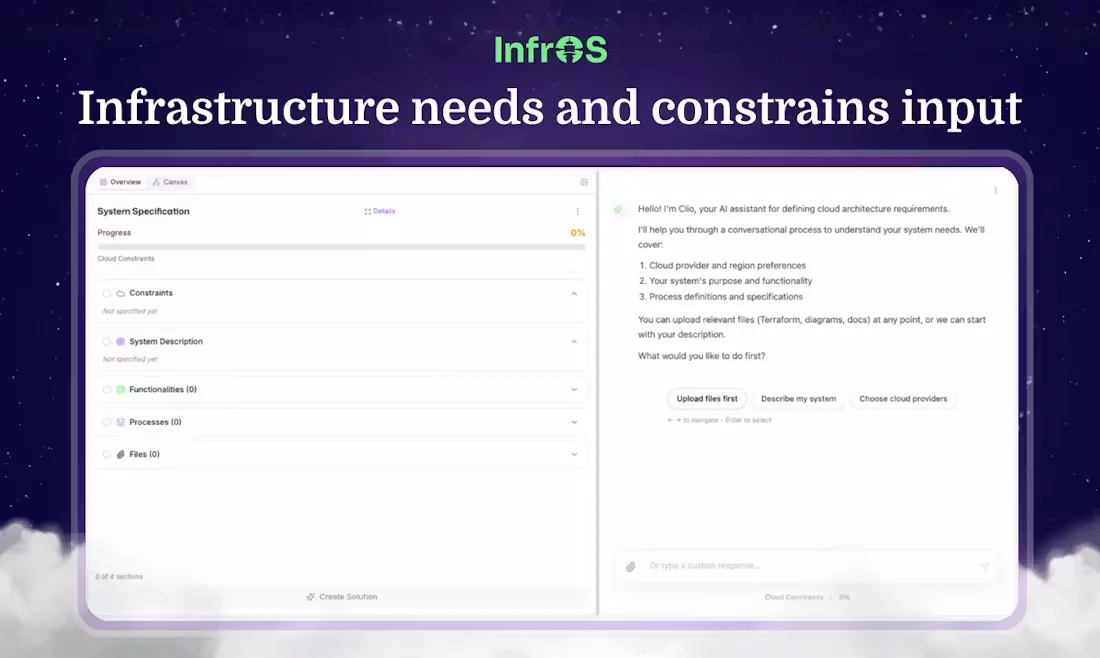
When teams build cloud systems, a lot of decisions are made under pressure or based on partial visibility. It is common to optimize for speed of shipping and deal with tradeoffs later. InfrOS flips that order slightly by letting teams express what they are trying to build and what matters most, whether that is cost efficiency, performance, or resilience.
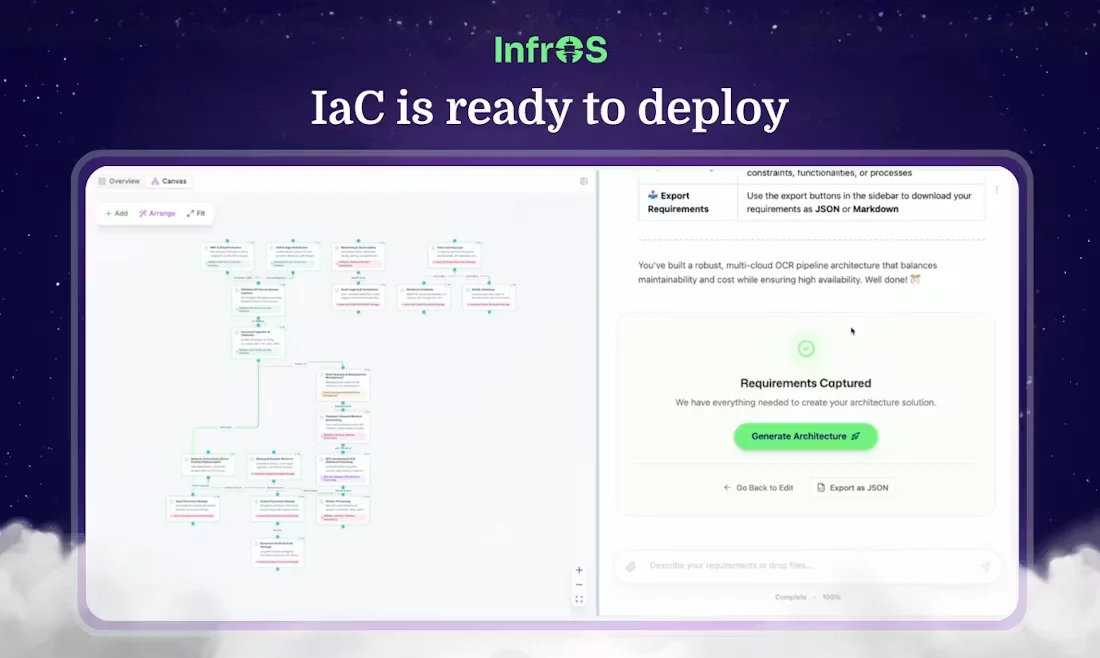
From there, it helps shape an architecture that is aligned with those priorities instead of forcing teams to discover misalignment after deployment. The emphasis is not on abstract design diagrams, but on how those systems will behave once they are actually running.
Seeing behavior before it exists
A key part of InfrOS is its ability to emulate infrastructure behavior before anything is deployed. Rather than relying only on static rules or assumptions, it tries to simulate how systems respond under load, scaling conditions, and real usage patterns.
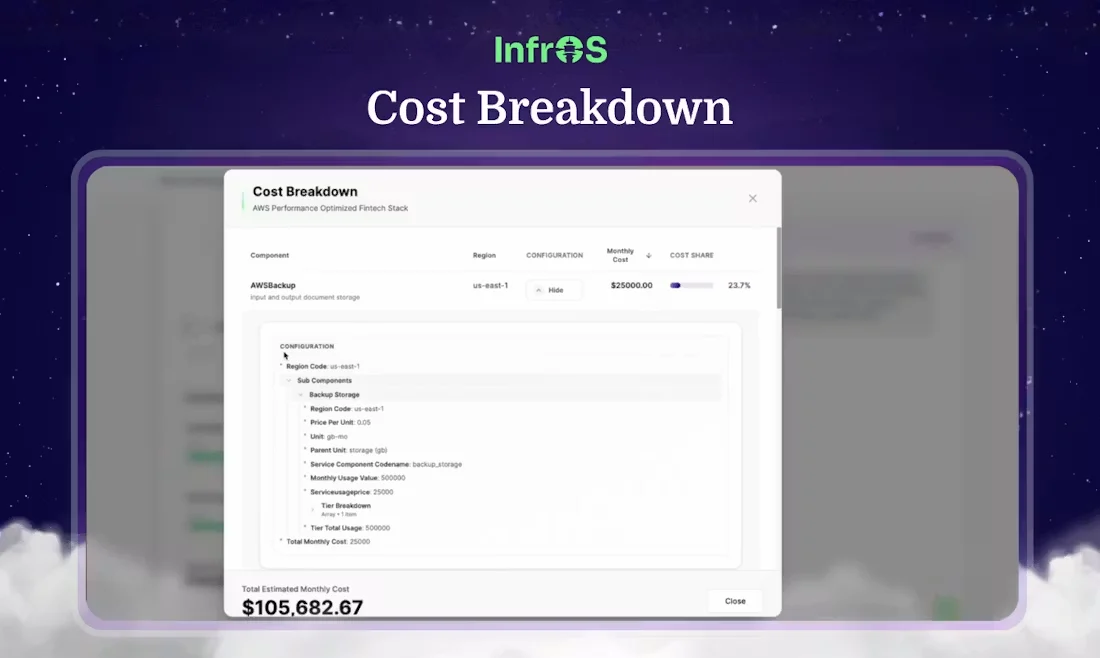
This gives teams a way to explore decisions that are normally expensive to test in production. For example, how a system behaves during traffic spikes, where bottlenecks appear first, or how cost scales when usage grows. Instead of learning these things after failure, they can be surfaced earlier in a controlled environment.
Infrastructure that stays understandable over time
As systems grow, the challenge is rarely just initial design. It is understanding what happens after months of changes, scaling, and incremental adjustments. InfrOS is positioned as a way to keep that evolution visible and intentional.
Rather than treating infrastructure as something that gets “set and forgotten,” it keeps the focus on continuous awareness of tradeoffs. Teams can adjust systems while still understanding the impact of those changes, which becomes increasingly important as architectures become more distributed and complex.