


GitAgent by Lyzr
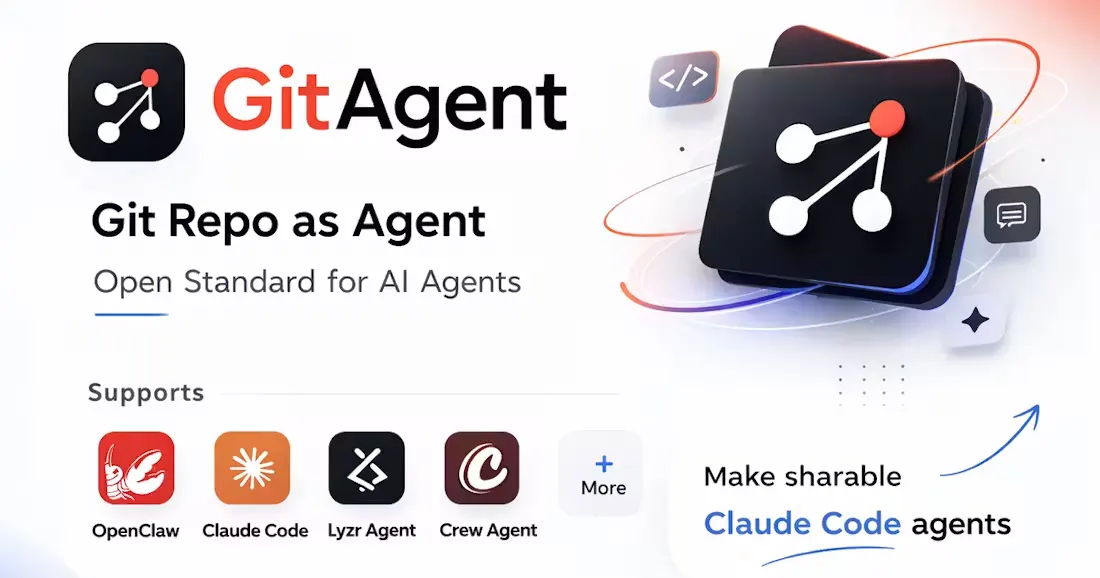
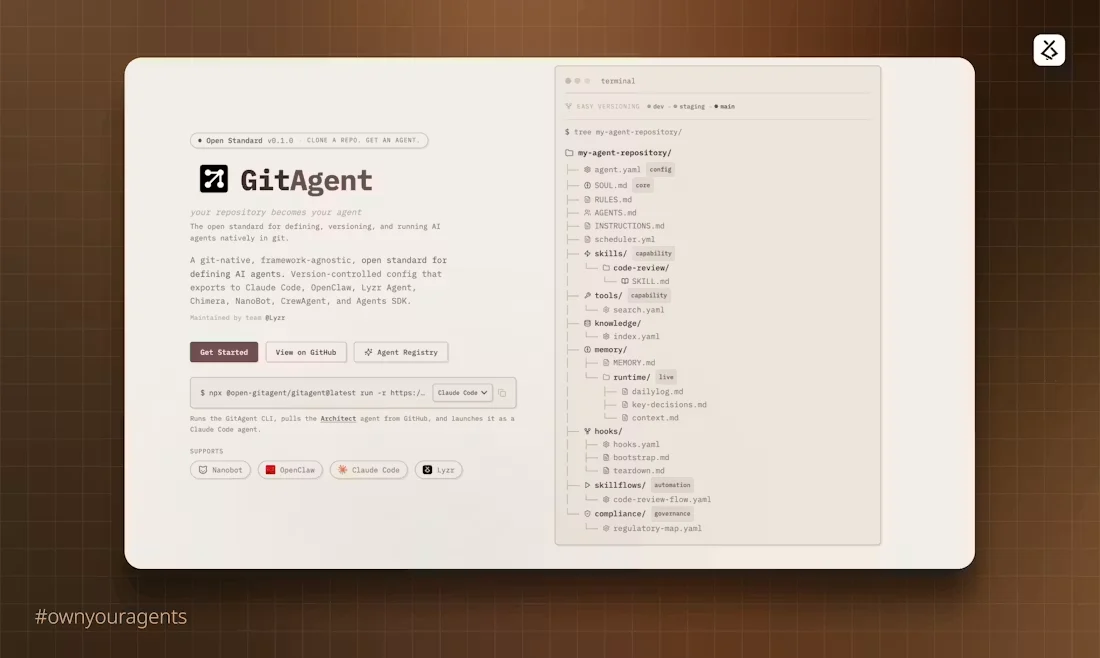
GitAgent is an open standard designed to treat AI agents more like software projects and less like configurations trapped inside proprietary frameworks. Instead of tying an agent’s prompts, memory, tools, and behavior to a single runtime, GitAgent moves those definitions into a portable, version-controlled structure that lives directly inside a Git repository.
The core idea behind the product is simple: if agents are becoming long-term software systems, they should inherit the same workflows developers already use for code. That means branching, reviewing, diffing, reproducing, rolling back changes, and keeping agent behavior portable across different runtimes and providers.
Defining agents independently from frameworks
A major frustration in the current AI tooling ecosystem is that many agent systems become tightly coupled to the framework they were created in. Prompts, memory systems, tool configurations, and execution logic are often difficult to migrate or reproduce elsewhere.
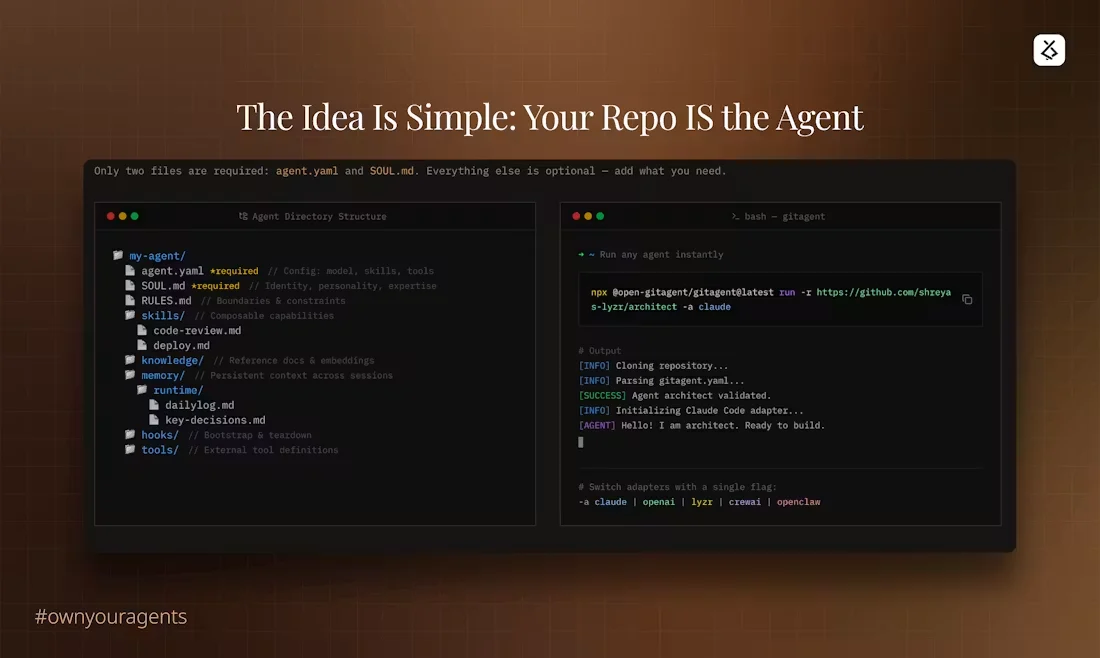
GitAgent tries to solve that portability problem by separating the agent definition from the execution environment itself. The same repository can theoretically run across Claude, OpenAI, CrewAI, OpenClaw, or other runtimes without rebuilding the agent from scratch every time.
This gives developers more ownership over how their agents are structured and deployed instead of locking long-term behavior into a single vendor ecosystem.
Bringing software engineering workflows into AI agents
Another interesting aspect of GitAgent is how strongly it leans into existing developer workflows rather than inventing entirely new abstractions.
Prompts can be versioned like source code. Agent configurations can be reviewed through pull requests. Behavior changes can be tracked historically and rolled back when something breaks. Different agent behaviors can even live on separate branches for experimentation.
The product essentially treats agent behavior as infrastructure that should be observable, reproducible, and collaborative in the same way modern software development already works.
Owning the agent layer
At a broader level, GitAgent reflects a growing movement inside the AI tooling ecosystem toward portability and ownership. As AI agents become more central to products and workflows, developers increasingly want the agent layer itself to remain transparent, editable, and independent from closed platforms.
GitAgent positions Git as the natural home for that layer. Not just for storing code, but for storing the evolving identity, behavior, and operational logic of AI systems themselves.