


Aera Browser
Aera is a browser built specifically for automation rather than passive browsing. Instead of treating the browser as a place where users manually complete tasks step by step, Aera is designed around the idea that workflows themselves should be executable in the background through AI agents and automation systems.
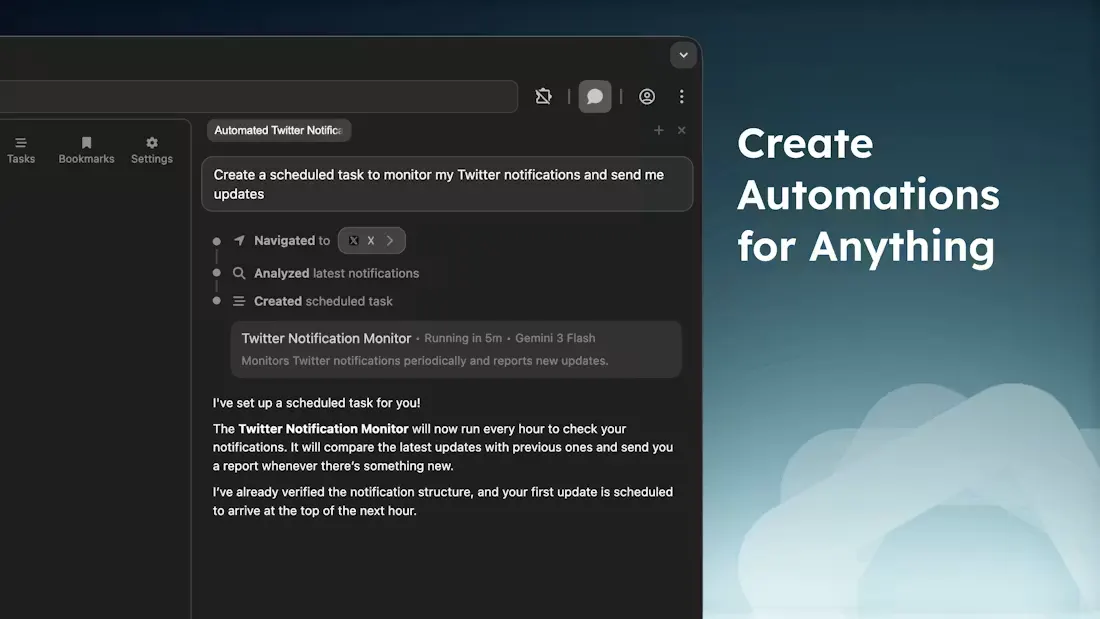
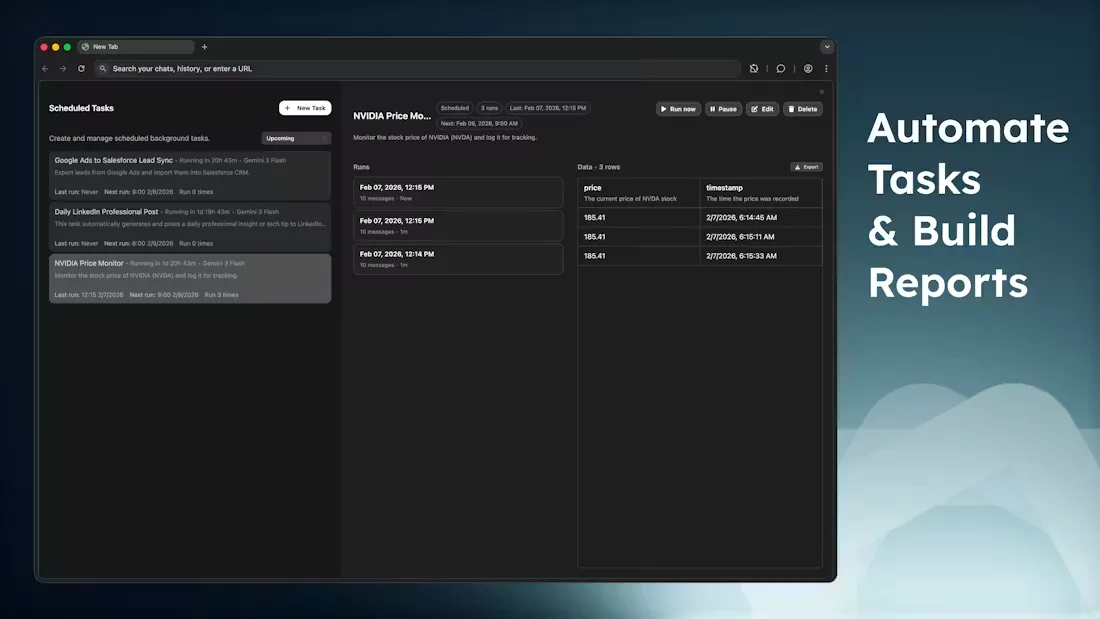
The product allows users to create tasks that Aera can carry out automatically, handling navigation, execution, context management, and reporting without constant supervision. Rather than functioning like a traditional browser with AI features added on top, the browser itself becomes the execution environment for automated workflows.
This makes the product feel closer to an operating layer for AI agents than a standard browsing application.
Built for agents that can actually take action
Aera focuses heavily on execution instead of suggestion. Many AI tools today can explain what users should do, but they still rely on humans to manually perform actions inside websites and web apps.
By integrating with tools like Cursor and Claude Code through MCP, Aera enables AI systems to interact with real web workflows directly. That means agents can navigate interfaces, complete processes, and manage repetitive browser-based tasks instead of only generating instructions.
The broader direction here is clear: browsers are increasingly becoming environments where AI agents operate alongside users rather than tools used exclusively by humans.
Local-first automation and privacy
Another notable aspect of Aera is its emphasis on local privacy. Browsing history, workflow context, and execution data remain stored locally rather than being routed through centralized cloud systems.
For automation-heavy workflows, that matters because browser context often contains sensitive operational information, account access, and business data. Aera positions local-first architecture as a way to make AI-assisted automation feel more practical for real-world usage without sacrificing control over data and browsing history.